Air distribution efficiency remains critical within modern HVAC design, which includes commercial buildings, hospitals, malls, and industrial facilities where balanced airflow allows for comfort, energy efficiency, and indoor air quality. One of the main components that makes this possible is the use of Volume Control Dampers (VCD).
In this technical guide, we will explore what volume control dampers are, how they work, their types, applications, benefits, and installation considerations. We will also include FAQs to help you better understand their role in airflow systems.
What Are Volume Control Dampers?
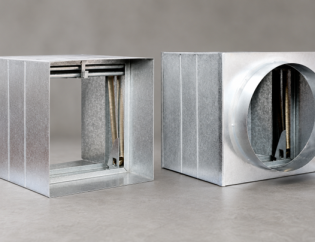
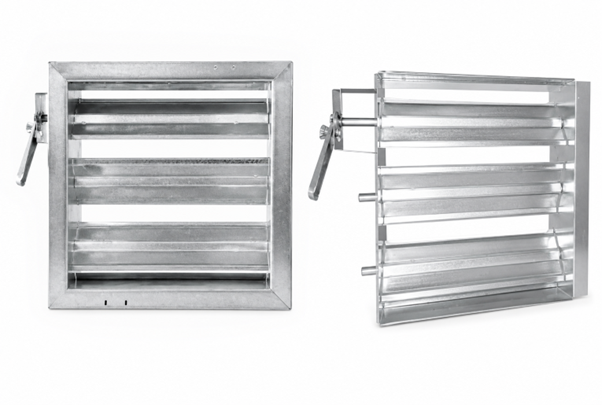
Volume control dampers are mechanical devices located within ductwork whose purpose is to modify, limit, and maintain the flow of air through an HVAC (Heating, Ventilation, and Air Conditioning) system.
The installation of volume control dampers provides HVAC engineers with the potential to increase the overall efficiency and comfort levels of the indoor environment:
- Adjust the volume of air flowing within specific zones
- Balance the distribution of air throughout the entire building
- Improve the overall efficiency of the system
- Maintain the comfort levels of the indoor environment
In other words, a volume control damper operates as a ‘valve for air.'
How Volume Control Dampers Work
They adjust the position of the blades or louvers located inside the duct.
Basic Working Principle:
- Air passes through the duct system
- The product's damper blades rotate and/or slide
- Opening of the damper increases the flow of air
- Closing of the damper reduces the flow of air
By controlling the blade angle, technicians can fine-tune the amount of air passing through each section of the HVAC system.
There are two main control methods:
- Manual control – adjusted using a handle or lever
- Automatic control – connected to actuators and building management systems (BMS)
Types of Volume Control Dampers
There are several types of volume control dampers used in HVAC systems depending on application and design requirements.
- Manual Volume Control Dampers
These are adjusted manually using external levers. They are commonly used in small systems where airflow does not need frequent adjustment.
- Motorized Volume Control Dampers
These dampers are connected to electric actuators and controlled automatically through thermostats or building management systems.
Advantages:
- High-precision control
- Remote operation
- Ideal for smart buildings
- Opposed Blade Dampers
In this design, blades rotate in opposite directions. They provide:
- Better airflow control
- More uniform air distribution
- Higher accuracy in balancing systems
- Parallel Blade Dampers
Blades move in the same direction. These are often used for:
- On/off control
- Basic airflow regulation
- Round and Rectangular Dampers
- Round dampers are used in circular ducts
- Rectangular dampers are used in standard duct systems
Applications of Volume Control Dampers
Volume control dampers are used in almost every type of HVAC installation.
Common applications include:
- Commercial buildings
- Hospitals and healthcare facilities
- Shopping malls
- Hotels
- Industrial plants
- Office buildings
- Residential complexes
They help ensure that each zone receives the correct amount of conditioned air.
Importance of Volume Control Dampers in HVAC Systems
Proper airflow control is essential for system efficiency and occupant comfort. Volume control dampers play a critical role in achieving this balance.
Key importance includes the following:
- Airflow Balancing
Different rooms require different airflow levels. Dampers help distribute air evenly.
- Energy Efficiency
By controlling unnecessary airflow, HVAC systems consume less energy, reducing operational costs.
- Indoor Comfort
Maintains consistent temperature and air quality across different zones.
- System Protection
Prevents overloading of HVAC components by regulating air pressure.
Materials Used in Volume Control Dampers
Volume control dampers are made from durable materials depending on application:
- Galvanized steel (most common)
- Aluminum (lightweight applications)
- Stainless steel (corrosive environments)
Seals and bearings are often made from rubber or synthetic materials for smooth operation.
Installation Considerations
Proper installation is essential for effective damper performance.
Important factors:
- Correct sizing based on duct dimensions
- Proper sealing to avoid air leakage
- Easy access for maintenance
- Correct blade orientation
- Integration with control systems (if motorized)
Poor installation can lead to air leakage, noise, and reduced efficiency.
Maintenance of Volume Control Dampers
Regular maintenance ensures long-term performance.
Maintenance practices include the following:
- Checking blade movement
- Cleaning dust and debris
- Lubricating moving parts
- Inspecting actuator functionality
- Ensuring no air leakage
Routine inspection helps maintain system efficiency and prevents breakdowns.
Benefits of Volume Control Dampers
Using volume control dampers in HVAC systems provides multiple benefits:
- Improved airflow distribution
- Energy savings
- Enhanced indoor comfort
- Reduced system strain
- Better temperature control
- Increased HVAC lifespan
They are essential for both small and large-scale HVAC systems.
Common Problems in Volume Control Dampers
Even though they are reliable, some issues may occur:
- Air leakage due to worn seals
- Stuck or jammed blades
- Improper calibration
- Dust accumulation
- Actuator failure (in motorized systems)
Regular maintenance helps prevent these issues.
Future of Volume Control Dampers
With the rise of smart buildings and automation, volume control dampers are becoming more advanced. Integration with IoT and building management systems allows the following:
- Real-time airflow control
- Energy optimization
- Predictive maintenance
- Automated climate control
This makes modern HVAC systems more efficient and intelligent.
FAQs
- What is a volume control damper?
A volume control damper is a device used in HVAC systems to regulate and balance airflow inside ductwork.
- Where are volume control dampers used?
They are used in commercial buildings, hospitals, malls, hotels, and residential HVAC systems.
- What is the main function of a volume control damper?
Its main function is to control the amount of air flowing through different sections of a duct system.
- What is the difference between manual and motorized dampers?
Manual dampers are adjusted by hand, while motorized dampers are controlled automatically using actuators or building systems.
- How often should volume control dampers be maintained?
They should be inspected at least once or twice a year depending on system usage.
- Can volume control dampers improve energy efficiency?
Yes, by regulating airflow properly, they reduce unnecessary energy consumption in HVAC systems.
- What causes volume control dampers to fail?
Common causes include dust buildup, mechanical wear, poor installation, or actuator malfunction.
Final Thoughts
Volume control dampers are a critical component in modern HVAC systems. They ensure balanced airflow, improve energy efficiency, and enhance indoor comfort across all types of buildings.
From commercial complexes to industrial facilities, these devices play a silent but powerful role in maintaining optimal environmental conditions.
Understanding their function, types, and maintenance needs helps engineers and facility managers design better, more efficient air distribution systems.